
"in the process"
57000 article(s) found

Costa Rica Brumas processing Plant | Dona Cromancia Horticultural brothel Seeds Honey treatment COE#2
Professional coffee knowledge exchange more coffee bean information please follow the coffee workshop (Wechat official account cafe_style) Costa Rica Brumas processing plant | Dona Clomancia Villa horticultural brothel honey processing COE#28 batch flavor? Beneficio Brumas del Zurqui was founded by the Rodrguez Carballo family in 1880 and is now

Introduction to the Flavor of different treatments of Red Honey by washing Coffee
Introduction to the flavor of different treatments of sunburn honey by washing coffee. The process of natural solarization (Natural/Dried-in-the-Fruit) is the simplest. The fruit begins the process of sun drying without treatment after picking. This is the oldest method of treatment in existence. This method is still used in places such as Ethiopia and Brazil. The natural solarization method is used in

Introduction to the processing process of Coffee Bean Water washing treatment-- the flavor of the producing country describes the taste producing area
Introduction to the processing process of washing coffee beans-- description of taste in producing areas: 1. Selection of beans: put the harvested fruits in a sink filled with water and soak for about 24 hours. At this time, ripe fruit will sink, while immature and overripe fruit will float up and can be removed. 2. Remove the pulp: use a machine to remove the skin and pulp, leaving only the coffee wrapped in the endocarp.

Introduction to the treatment of coffee beans how many treatment methods are there?
In the process of washing, the peel and pulp of the fruit are treated by a special desizing machine and the coffee beans are peeled off. The coffee beans then enter the fermentation tank for fermentation treatment so that the mucous membrane is no longer sticky. The sugars in the mucous membrane are decomposed during fermentation. Depending on the fermentation method, the fermentation time is usually 12 hours to 6 days (some growers use the watering system to ferment coffee beans.

The production process and main ingredients of coffee
The coffee production process from the coffee fruit to the coffee in the cup requires a complex processing process. Coffee beans: peel the coffee beans from the coffee fruit. Roasting: is to cultivate the taste of coffee beans and mellow processing. The excellent roasting process allows the coffee beans to completely volatilize their unique taste and aroma. Grinding: grind roasted coffee beans into particles. Extract

Musk Coffee processing characteristics of the production process authentic Indonesian Kopi Luwak how to make good?
The production of gourmet coffee civet coffee (kopiLuwak): the process of making civet coffee is very unique. All coffee beans used to make coffee must be eaten by civets before entering the formal grinding and baking process. After the musk cat intestinal absorption, digestion and excretion before production. Pass through

Introduction to the description of taste and flavor of coffee beans treated by sun exposure
Characteristics of sun treatment of coffee beans taste and flavor description 1. The process of natural solarization (Natural/Dried-in-the-Fruit) is the simplest. The fruit begins the process of sun drying without treatment after picking. This is the oldest method of treatment in existence. This method is still used in places such as Ethiopia and Brazil. The natural solarization method is used in

What is the honey treatment of coffee? what are the characteristics of coffee beans treated with honey? what is the reason for coffee leucorrhea?
1. Natural solarization (Natural/Dried-in-the-Fruit): the process of this method is the simplest. The fruit begins the process of sun drying without treatment after picking. This is the oldest method of treatment in existence. This method is still used in places such as Ethiopia and Brazil. Natural solarization is most common in areas where water resources are scarce. The process of drying is usually

Ethiopian Honey Processing Sidama Coffee Valley Jidri Korcha Processing Plant Deri Korcha
Professional coffee knowledge exchange More coffee bean information Please pay attention to coffee workshop (Weixin Official Accounts cafe_style) Ethiopia Sidamo Valley Jidri Koga Treatment Plant White Honey Treatment Production Country Ethiopia Sidamo,Guji Farm Deri Korcha Elevation 1950 2100 m Treatment White Honey Process Grade Q1 Variety Heirloom Flavor
Processing methods of Coffee beans in Coffee Encyclopedia
1. The processing method chosen by the processing method has a significant impact on the final price and quality of coffee. The first step in processing coffee beans is to dry them. There are two specific methods, the most whole-family processing method is called drying, which is used for unwashed coffee beans to produce lower-grade coffee beans, while the higher-quality coffee beans are processed by wet treatment, which is used for
The process from a coffee bean to a cup of coffee
What's coffee? First of all, we think of a cup of strong aroma and black liquid, or a cappuccino with white foam, or a large cup of cold and refreshing iced coffee, these are all coffee, but this is not all coffee. If coffee is fully defined literally, coffee should be red coffee grown on a green shrub called coffee tree.

What is the treatment of white honey in Delia Manor in Herba processing Plant, Costa Rica? How to drink?
Description of Verasa strange white honey flavor in Delia Manor, Costa Rica: lemon aroma, jasmine, plum, sweet peach, roasted almonds, cashew nuts, delicate acidity, soft taste and delicate sweetness. award record: in 2016, Herbacher processing Plant of COE Cup in Costa Rica won the batch of newly cultivated SL28 varieties in 2015.

Costa Rican Coffee Costa Rica Honey Coffee Costa Rica Ponte processing Plant
Professional coffee knowledge exchange more coffee bean information Please follow the coffee workshop (Wechat official account cafe_style) Costa Rica has a coffee history of more than 200 years. It is not only an important basis for the country's economy and people's livelihood, but also an indispensable role in the global coffee history. In the past decade, it has become popular all over the world as a micro-processing farm, in this small Central American country.

Coffee beans are processed in two ways.
Aftertheharvest coffee bean processing: coffee pulp must be processed immediately after picking to prevent unsightly meat fermentation and rancidity. Coffee beans are processed in two ways, wet and dry.

The picking and growing process of Coffee-- an introduction to the Manor of planting Environment
The process of picking and growing coffee-- planting environment, producing area manor introduction, also known as drying processing. After the coffee berries are fully ripe, they will fall from the tree. After natural drying, the coffee beans will come out of the coffee berries and become mature coffee beans. This is probably the earliest way to process coffee beans. Later, this method evolved into a drying process. This processing party

Costa Rica Blumas processing plant Vera Sasaki red honey processing method is what?
Costa Blomas Processing Plant Centro Estate Vera Sacci Red Honey Flavor Description: High sorbic, ripe orange fruit, floral notes, toasted walnut, acid elegant but lively, brown sugar finish. Finca El Centro won 19th place in the Costa Rica COE 2017 and 3rd place in the Costa Rica COE 2016.

Tell you how anaerobic coffee beans ferment? Basic principles and process requirements of Coffee processing
Professional coffee knowledge exchange more coffee bean information please follow the coffee workshop (Wechat official account cafe_style) Coffee fermentation is a natural process by which microorganisms such as yeast (Saccharomyces cerevisiae) and bacteria (lactic acid bacteria) consume and metabolize compounds such as sugars and acids in coffee cherries.

What is the difference between the first coffee roasting process and the second coffee roasting process?
Professional coffee knowledge exchange more coffee bean information please follow the coffee workshop (Wechat official account cafe_style) professional coffee roasting | coffee roasting is too complicated? A picture teaches you the roasting process. After the first article on coffee roasting, this time we will briefly introduce the roasting process. The process of roasting coffee is a simple metaphor. The process of roasting coffee is like popcorn.
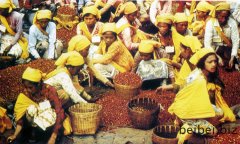
Post-harvest processing of coffee beans in Coffee Encyclopedia
After the harvest coffee bean processing: coffee berries must be processed immediately after picking to prevent pulp fermentation and decay. Coffee beans can be processed in two ways, wet and dry. The drying method is also called the natural method. Spread the coffee berries flat in the sun to dry. In the plantation, 50 square meters of coffee berries are laid on each hectare, or
Introduction of coffee beans and some boutique coffee in the main producing areas of coffee beans in the world (3)
Introduction of coffee beans and some fine coffee in the main producing areas of coffee beans in the world: Africa